
Case Studies
The Red Deer County build below reflects actual engineering scope from completed, permitted designs. The two entries after it describe how our funding readiness and asset audit engagements typically run, rather than a specific past client — real case studies for those service lines will replace them as projects are completed.
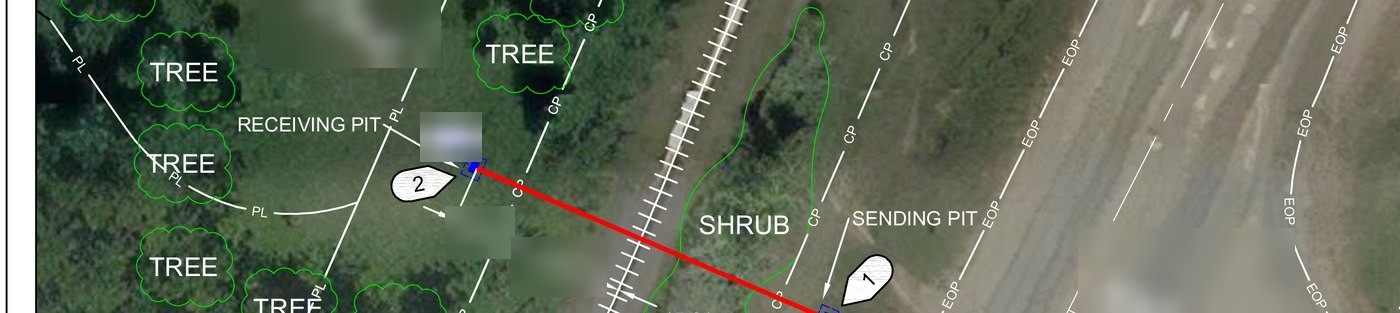
Excerpt from the actual rail crossing engineering drawing for this project. Title block, street references and setback dimensions have been removed. Illustrative excerpt, not a stamped drawing for construction. Imagery © Microsoft, © Maxar, © CNES (2021), distributed by Airbus DS.
~141 km of rural fiber route engineered and a live CP Rail mainline crossed without surface disturbance
Client: Valo Networks, an independent network operator building rural broadband infrastructure in Red Deer County, Alberta
Scope: P.Eng.-stamped outside-plant design across four project segments in Red Deer County, plus a regulated Canadian Pacific Railway crossing engineered under Transport Canada General Order E-11 and CPR Specification SP-TS-2.39.
The challenge: Rural fiber routes at this scale carry two compounding risks: civil design that doesn't match real field conditions once construction starts, and regulated crossings — rail, highway — that stall a project for months if the engineering doesn't meet the crossing authority's specification on the first submission.
What we did: Designed and quantified the full civil and cable scope for each segment, and engineered the CP Rail crossing as a trenchless horizontal directional bore beneath the CP Rail right-of-way, meeting CP's crossing specification with zero surface disturbance.
Outcome: Four buildable, permitted segments and a P.Eng.-stamped rail crossing design that Valo Networks' civil contractor built to, with the CP Rail HDD crossing engineered for zero surface disturbance within the railway right-of-way.
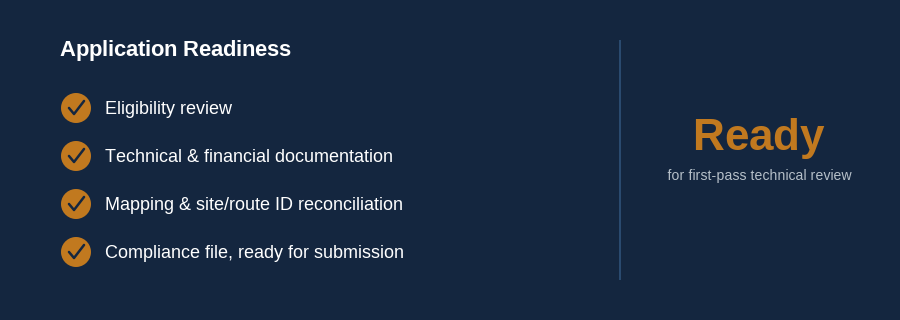
Illustrative diagram; this entry describes a typical engagement, not a specific past client.
What funding readiness support typically looks like
Client type: Developers and municipalities preparing a CRTC Broadband Fund or provincial connectivity application, or repairing a package after a technical decline.
The challenge: Funding applications are most often declined on technical grounds, not project merit — incomplete technical documentation, mapping data that doesn't reconcile with the submitted site and route IDs, or an eligibility case that wasn't built out clearly enough for a reviewer to approve on the first pass.
What we do: Review the technical and financial package under P.Eng. oversight, reconcile documentation against program-specific requirements, and prepare a compliance file built to survive review rather than invite a deficiency notice.
What this typically resolves: A funding package a reviewer can approve without a second round of questions. See our CRTC Broadband Fund Call 4 breakdown for what reviewers actually check.
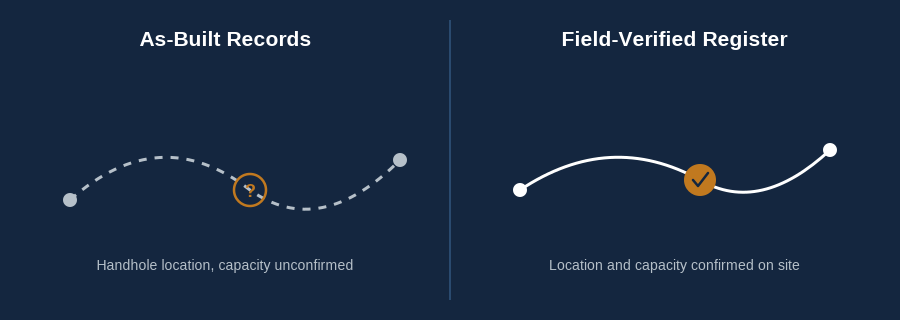
Illustrative diagram; this entry describes a typical engagement, not a specific past client.
What an outside-plant asset audit typically finds
Client type: Municipalities and developers who need an accurate picture of existing conduit and fiber assets before a transaction, funding application, or new build.
The challenge: As-built records on legacy systems are rarely accurate. Conduit shown as available is often full; cable marked as removed is often still in place; handholes and splice points drift from their recorded locations. Planning or negotiating around records instead of field conditions creates risk on both sides.
What we do: Combine a records review with field verification — vault by vault, duct by duct — to produce an asset register that reflects what's actually in the ground, not what the drawings say.
What this typically resolves: An asset position a municipality or developer can actually plan, fund, or negotiate against with confidence. See what these audits typically find for specifics.